The Art of Storytelling, why it matters

In Hollywood, screenwriters get three to five minutes to pitch a movie. Producers need about forty-five seconds to decide.
Forty-five seconds. For a film that might take three years and two hundred million dollars to make.
What happens in those seconds isn't magic. It's a test. Producers are listening for a logline, one or two sentences that explain what the movie is about in a way that makes them lean forward. No logline, as communication expert Carmine Gallo puts it, usually means no sale.
The same test happens, quietly, to every idea anyone has ever tried to bring into the world. A startup pitching investors. An engineer pitching a redesign. A leader pitching strategy to a boardroom that has seen a hundred strategies this year. The tools are different. The test is the same. Can you make someone care in the time it takes them to decide whether to keep listening?
The tragedy of the brilliant engineer
Some of the best engineers in the world end up as grinders. They do exceptional work. They solve problems their peers can't solve. And they watch their ideas die in meetings, killed by people who never understood what was being offered.
The problem isn't the work. The problem is that the people with the power to fund it, approve it, or deploy it don't care about technical jargon. They care about impact. And if you can't translate one into the other, the best engineering solution in the room loses to the second-best one that happens to have a story.
This is why true expertise isn't knowing the most. True expertise is being able to explain complex concepts in simple terms, and knowing how to read the room you're standing in. The senior engineer who can draw the architecture on a whiteboard for the CFO in three boxes has more influence than the one who can recite the spec from memory. Not because the CFO is smarter than the spec. Because the CFO is the one with the budget.
Why brains are wired for stories, not specs
The human brain craves meaning before details. Molecular biologist John Medina's research is blunt on this: when a listener doesn't understand the overarching idea, they can't digest the information that follows. The spec sheet is noise until the story gives it shape.
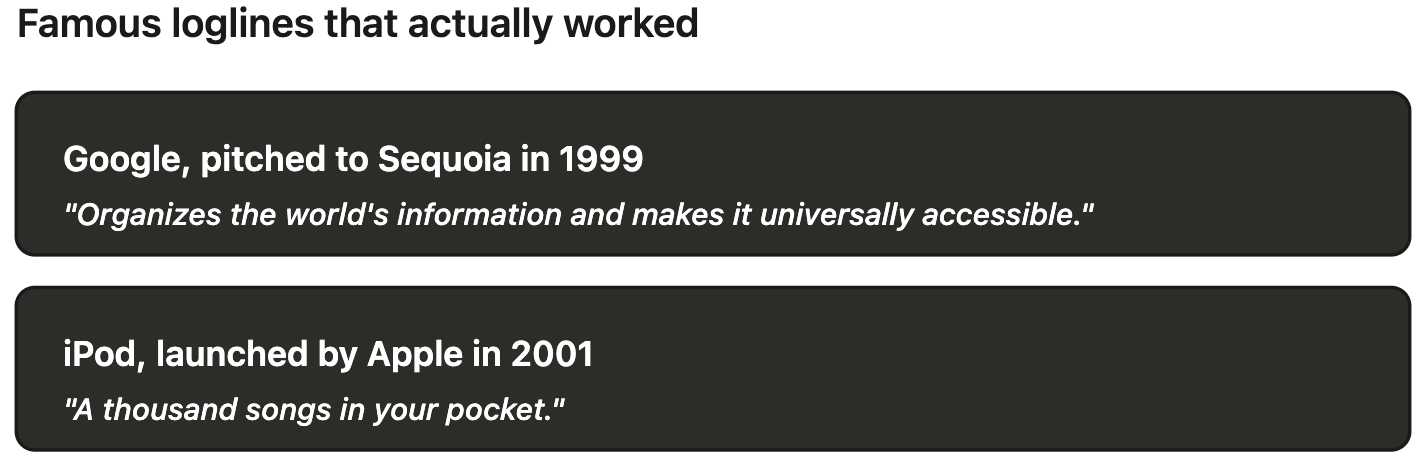
When Sergey Brin and Larry Page walked into Michael Moritz's office at Sequoia Capital, they pitched Google in ten words.
"Google organizes the world's information and makes it universally accessible."
Seventy-three characters. Short enough to fit in a tweet. Clear enough to trigger a Series A. They didn't start with the PageRank algorithm. They started with the shape of the thing.
What Tony Fadell learned from Steve Jobs
Tony Fadell, the product designer who led the teams behind the iPod, the iPhone, and the Nest thermostat, spent years watching Steve Jobs turn complicated products into stories people would line up overnight to buy. In his book Build, Fadell argues that every great product is backed by a compelling story, and that story is the heart of everything downstream. Marketing, sales, recruiting, funding. All of it is downstream of whether the story is any good.
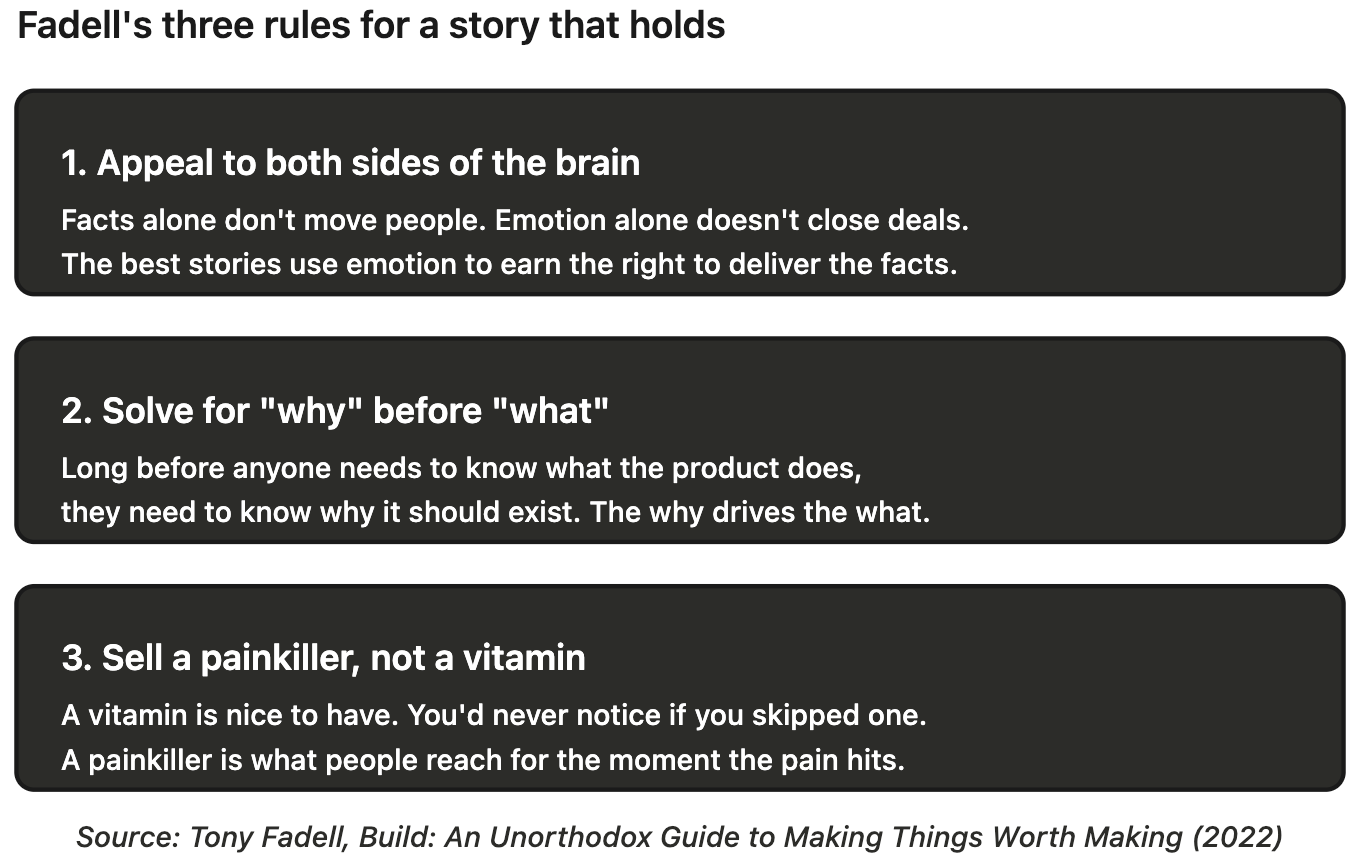
Fadell's framework has three parts.
The story has to appeal to both the rational and the emotional sides. Facts alone don't move people. Emotion alone doesn't close deals. Great stories use emotion to earn the right to deliver the facts.
The story has to solve for "why" before "what." Long before anyone needs to know what the product does, they need to know why it should exist. The why drives the what.
And the story has to sell a painkiller, not a vitamin. Vitamin pills are good for you, but you'd never notice if you skipped one. A painkiller is what people reach for the moment the pain hits. The best ideas solve a real problem someone has right now, in a way they can't ignore.
The iPod's story was never about flash memory capacity. It was a thousand songs in your pocket. The MacBook Air was the world's thinnest notebook. The Nest was the first thermostat that actually learned when you were home. None of those taglines describe the product fully. All of them make you want it immediately.
The good reason and the real reason
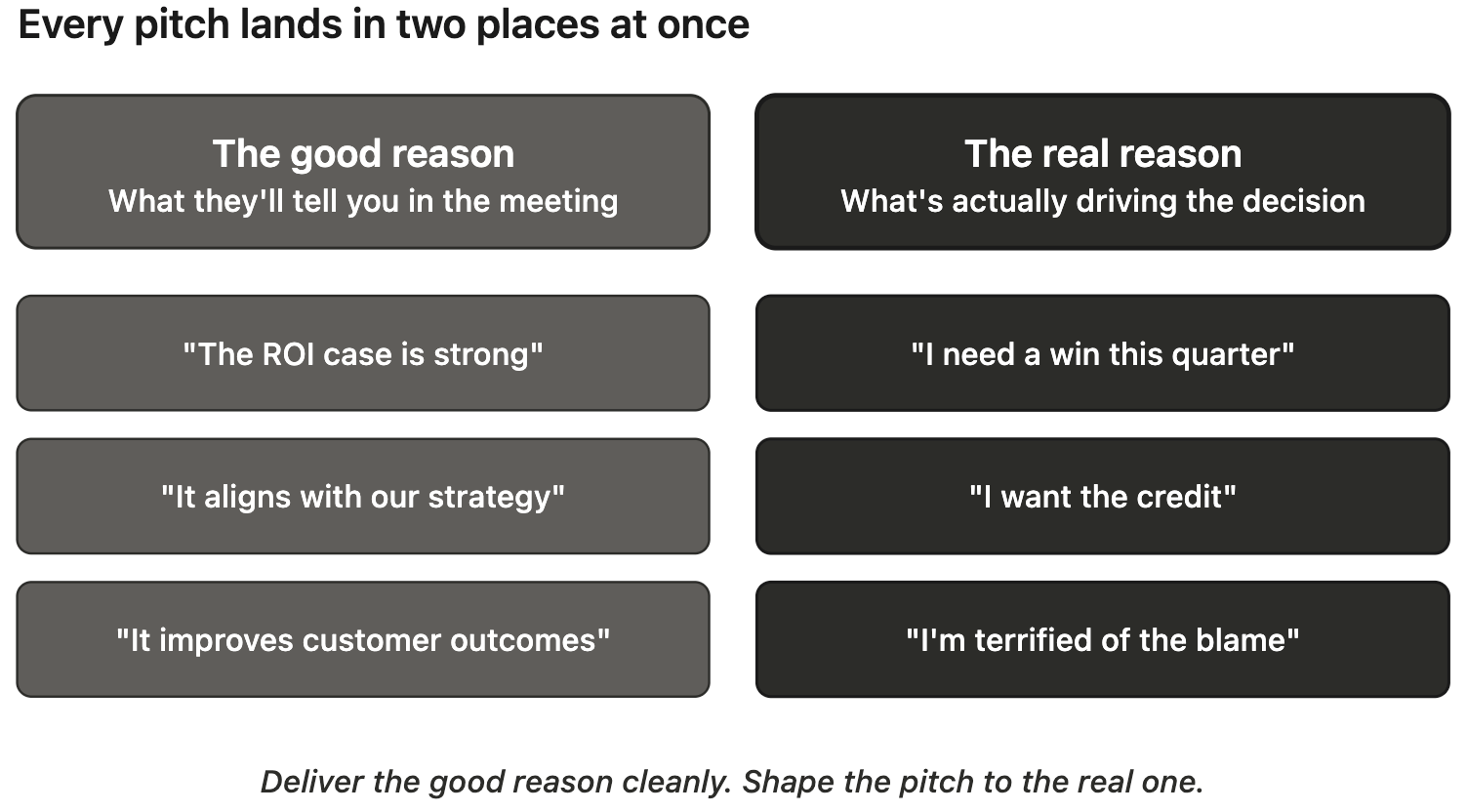
There's an old principle worth internalizing: everyone you pitch has a good reason and a real reason. The good reason is what they tell you in the meeting. The real reason is what's actually driving them.
The good reason for a VP to greenlight a project might be ROI, alignment with strategy, customer impact. The real reason is often quieter. They need a win this quarter. They're protecting a headcount from being cut. They want the credit. They're terrified of the blame.
The best storytellers don't ignore the good reason. They deliver it cleanly and move on. But they shape the pitch to the real one. They understand that the logline pitched to the CFO focused on cost, the one pitched to the VP focused on career leverage, and the one pitched to the engineer focused on technical elegance are all the same idea, wearing different clothes for different rooms.
That's not manipulation. That's respect for the human on the other side of the table.
Why this matters beyond business
Storytelling is the operating system of human coordination. Every movement, every institution, every family runs on some story about what is happening and why it matters. Take the story away and what's left isn't objectivity. It's slow disintegration, because nobody can coordinate around a spec sheet.
The engineer who can't tell the story of what their system does will watch their best work get killed in committee. The researcher who can't make a case for why their paper matters will watch the citation count stay at zero. The leader who can't articulate why the team should care will manage increasingly well-intentioned people who have quietly stopped trying.
None of this is about spin. It's about respect for the way humans actually receive information.
The part that isn't on the pitch deck
A story is not a trick you play on your listener. It's a gift you offer them. Care for their time. Care for the clarity of the idea. Care for the real reason they're in the room.
The ideas worth having are almost always harder to explain than they are to believe. The work of making them understandable is the work of making them real.
If you can't tell the story, the idea will live and die inside your head. The world has enough of those already.